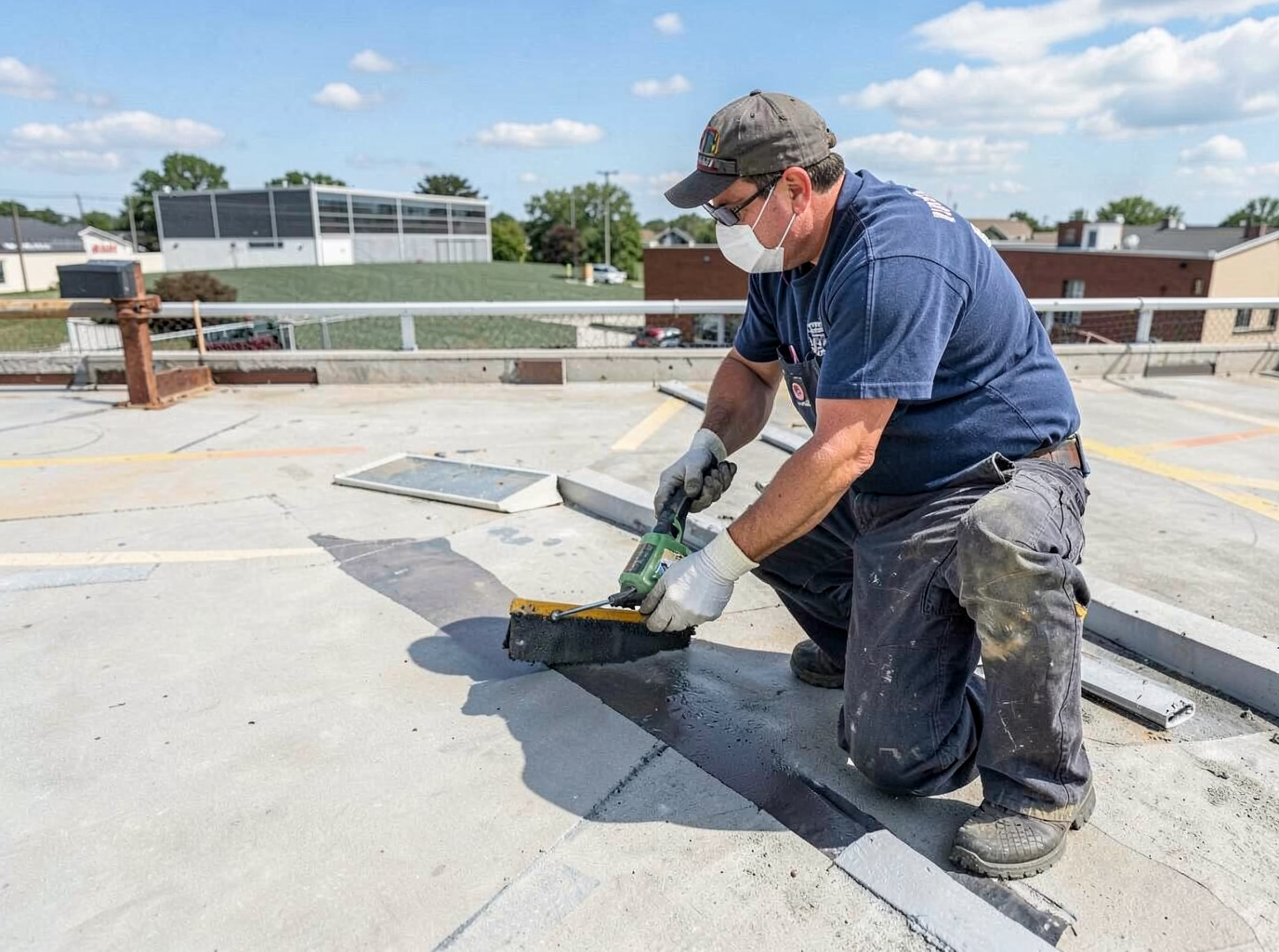
Commercial flat roofs in Downtown Topeka and nearby Potwin often sit on buildings from the mid-20th century that use modified bitumen or older EPDM systems. Hot summer days push surface temperatures well above 140 degrees while winter lows drop below zero, creating constant expansion and contraction at seams and flashings. Water ponding near drains or scuppers accelerates blistering, especially on roofs with poor original slope that were never corrected during prior work.
Repairs in Westboro and College Hill commercial properties frequently involve addressing wind-driven rain that works under loose perimeter edges during spring storms. Technicians check for insulation saturation beneath the membrane because Shawnee County humidity keeps trapped moisture from drying out quickly. When penetrations for HVAC units or skylights were added without proper boots, leaks show up first at the Kansas State Capitol area buildings where vibration from nearby traffic loosens fasteners over time.
Work near the Topeka Zoo or Ward-Meade Park properties must account for tree debris and pollen load that clogs drains faster than in open rural sites. Crews also watch for soil movement along the Kansas River corridor that can shift parapet walls slightly, cracking counterflashing. These conditions require material-specific adhesives rated for the local temperature range rather than generic products that fail after one full seasonal cycle.
Technician insight
In Topeka the thing that catches most people out with Commercial Flat Roof Repair is how quickly older EPDM shrinks and splits along the seams once our cold winters hit after a hot summer. Downtown buildings near the Kansas State Capitol often show this first because the original insulation was never tapered properly and water sits against every joint.
Westboro Office Building Leak
Water entered through split EPDM seams on a 1980s flat roof after repeated freeze-thaw cycles. Infrared scan showed two saturated insulation zones near the scuppers. Crews cut out the damaged sections, installed new tapered insulation and heat-welded fresh TPO patches over the seams. The owner reported no further leaks after the next heavy rain.
Commercial Flat Roof Repair Services We Offer
✓TPO Membrane Seam Repair
Heat-weld or adhesive seam restoration on commercial TPO roofs to stop water entry at failed factory and field seams common after Shawnee County freeze-thaw cycles.
✓EPDM Flashings and Penetrations
Replacement or resealing of pipe boots, curb flashings and wall terminations that loosen from thermal movement on flat roofs in Downtown Topeka.
✓Modified Bitumen Blister Repair
Cut-and-patch work on blistered modified bitumen surfaces caused by trapped moisture and repeated hot summer expansion in College Hill commercial buildings.
✓Drain and Scupper Clearing
Removal of debris and sediment from internal drains and scuppers that pond water on older flat roofs serving Highland Park businesses.
✓Perimeter Edge Restoration
Securing and resealing metal edge details and gravel stops that pull away during high winds common along Shawnee County commercial corridors.
Commercial Flat Roof Repair Cost in Topeka, KS
| Service | Typical Range | What Affects It |
|---|---|---|
| Minor seam or flashing repair | $450–$950 | Single location under 50 square feet on accessible roof |
| Multiple blister patches | $1,200–$2,800 | Three to six locations with core sampling |
| Perimeter edge reseal | $800–$1,600 | Linear footage along one elevation with new termination bar |
| Drain clearing and reseal | $350–$650 | Per drain including new clamping ring and sealant |
Ranges are typical for Topeka, KS and confirmed with an exact written quote before any work starts.
How it works
- 1
Site Assessment
Walk the roof and inspect all seams, flashings, drains and penetrations while noting existing membrane type and any prior patches.
- 2
Moisture Evaluation
Use infrared scanning or core cuts to locate saturated insulation beneath the membrane before any repair begins.
- 3
Material Matching
Select compatible adhesives, patches and coatings rated for Topeka temperature swings rather than generic stock.
- 4
Targeted Repair
Perform seam welding, flashing replacement or blister patching followed by water testing on the repaired sections.
- 5
Documentation
Provide photos and a written summary of conditions found and work completed for the building owner records.
Pricing
Upfront quotes based on roof size, membrane type and extent of moisture intrusion rather than square-foot averages.